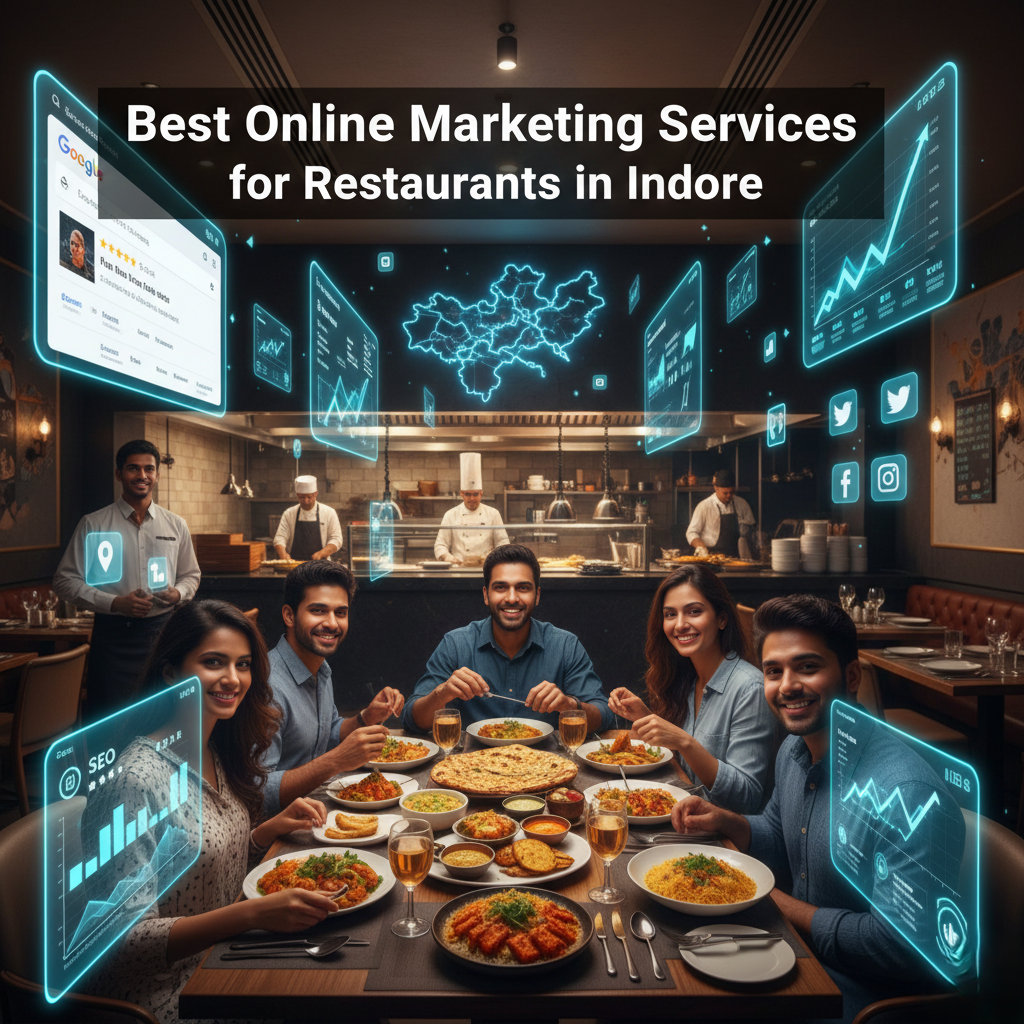
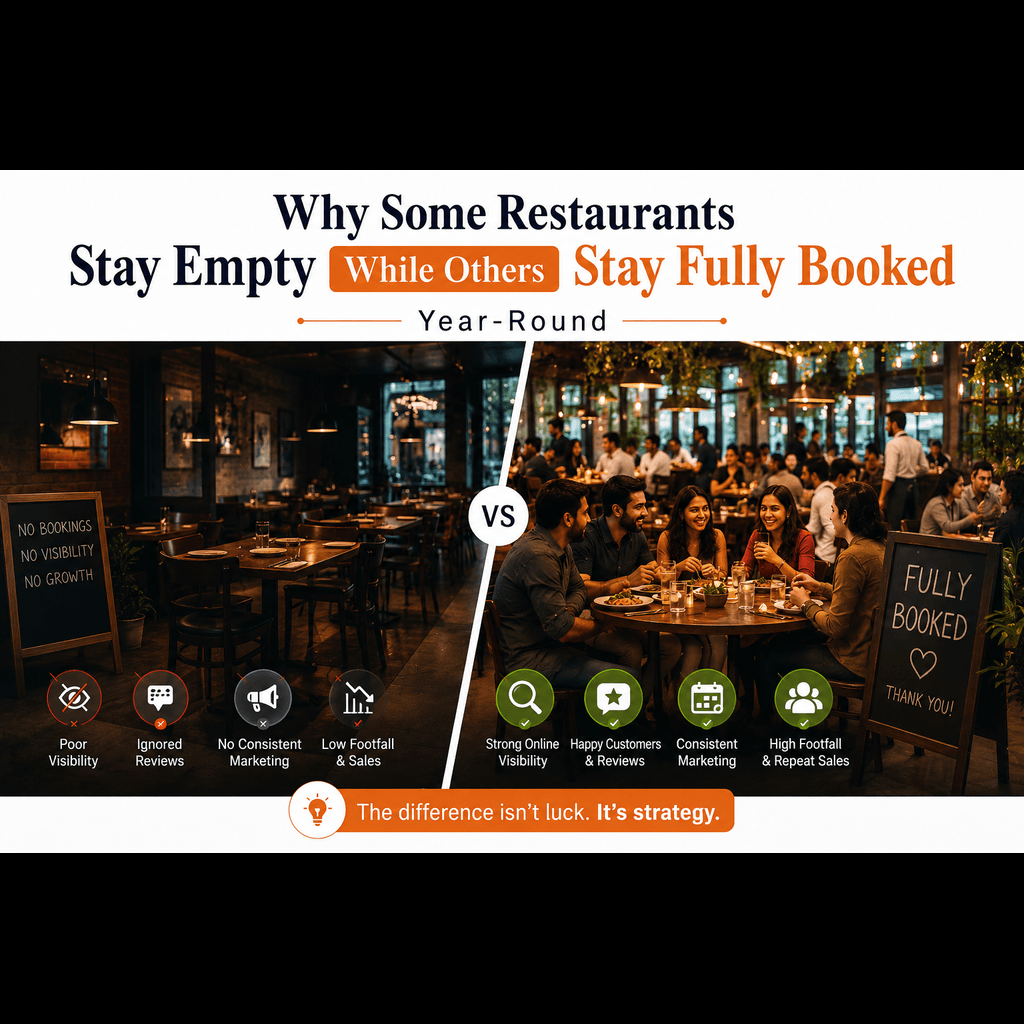
Walk through any busy market in India on a Saturday night, and you’ll see it instantly. One restaurant has a queue spilling onto the pavement. The one next door, sometimes with better food, sits half empty. It’s not luck, and it’s rarely just about the menu. According to the National Restaurant Association of India, the country’s food services industry now serves a market worth over ₹5.69 lakh crore, growing at more than 8% a year — which means competition for the same diner’s attention has never been tighter. The restaurants winning that competition aren’t necessarily cooking better food. They’ve simply figured out how to be found, chosen, and remembered.
This is where the gap actually lives. Most restaurant owners assume an empty dining room is a kitchen problem. More often, it’s a visibility problem, a trust problem, or a follow-up problem — and all three are squarely in the territory of marketing. Let’s break down exactly why this divide exists, and what separates restaurants that stay full from the ones that don’t.
The First Difference: One Is Easy to Find, the Other Isn’t
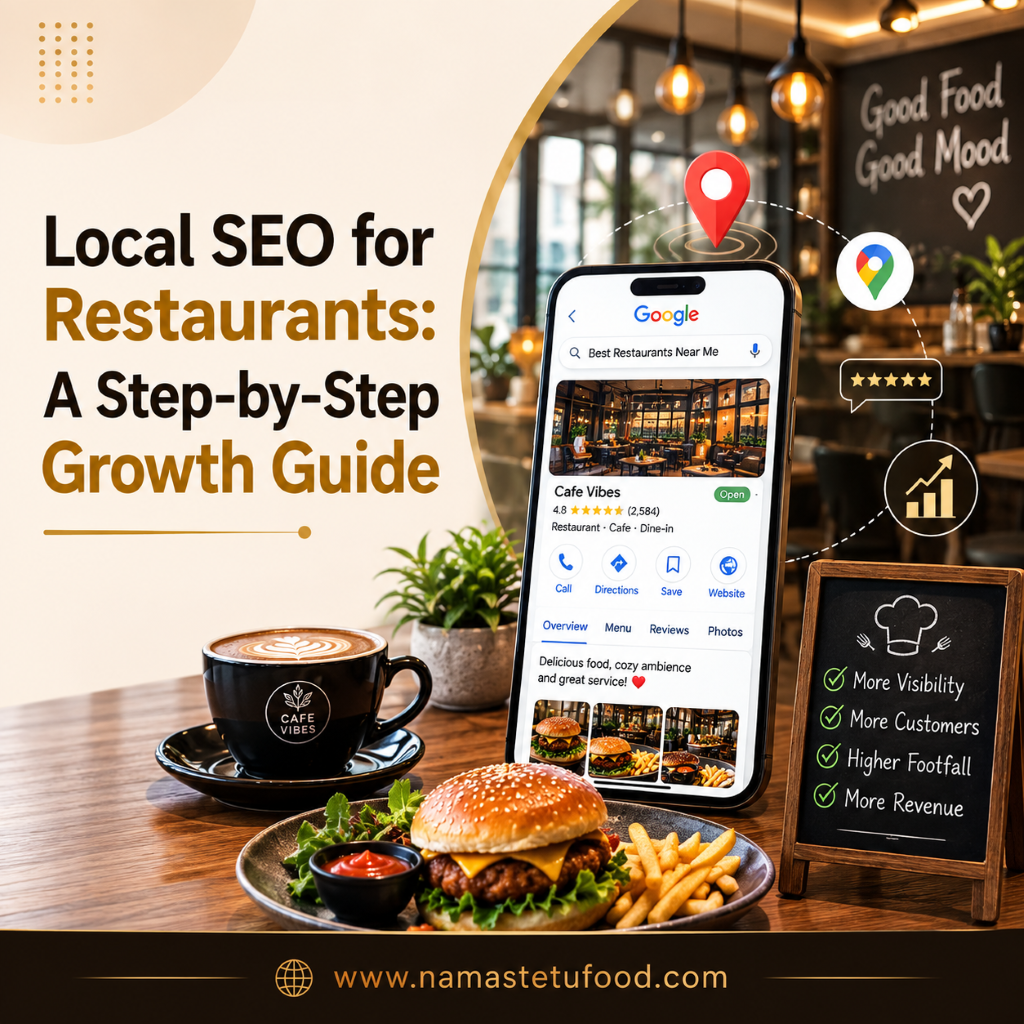
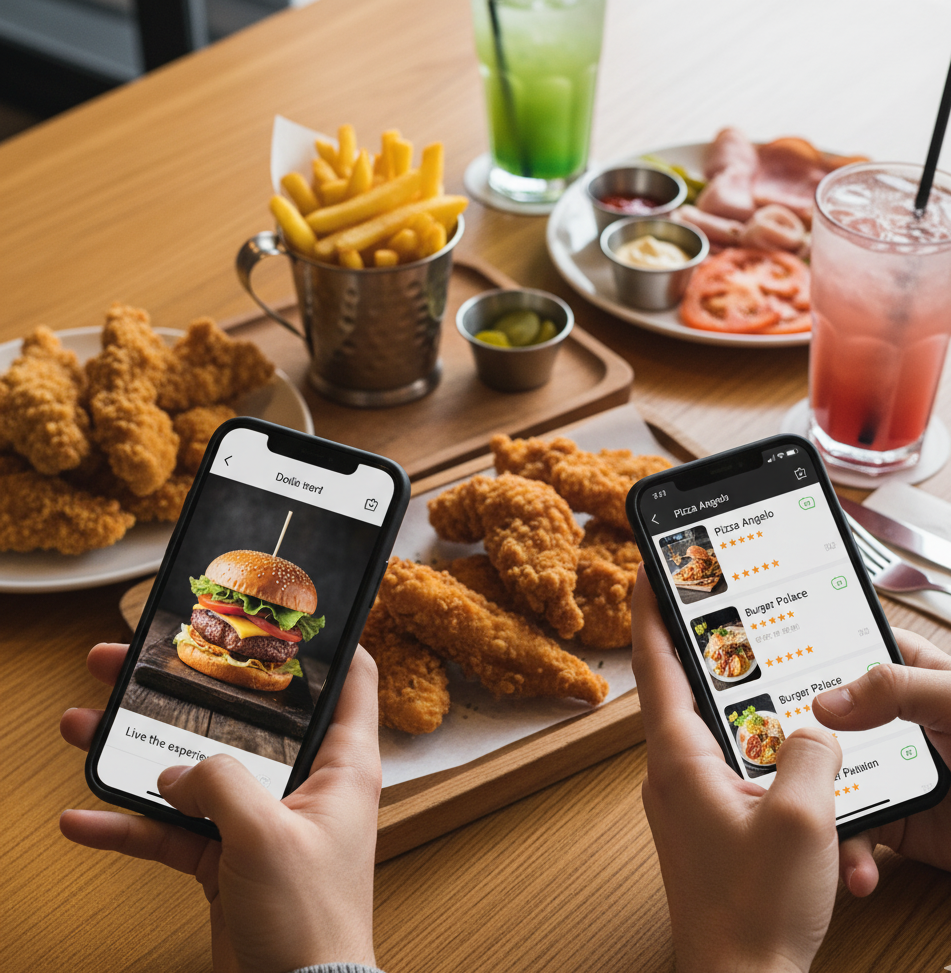
Before a customer ever tastes your food, they have to find you — and today, that search happens almost entirely on a phone. A restaurant with a strong digital marketing strategy for restaurants shows up when someone searches “biryani near me” or “best café for brunch.” A restaurant without one is invisible at the exact moment a hungry customer is deciding where to go. This is the exact gap a focused restaurant SEO service is built to close.
This isn’t about having a flashy website. It’s about a handful of specific things working together:
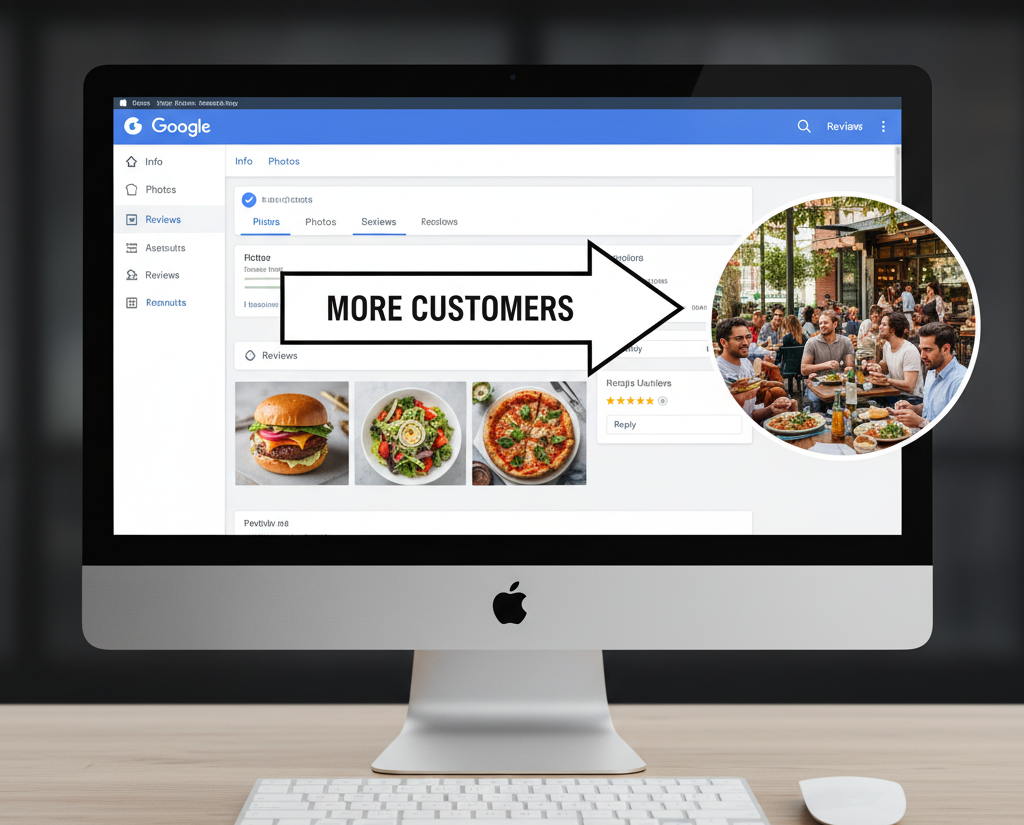
- A Google Business Profile that’s claimed, verified, and updated with current hours, menu, and photos
- Location and category tags that match what people actually search for (“North Indian restaurant,” not just “restaurant”)
- A mobile-friendly site that loads fast and shows the menu and location within seconds
- Consistent business information (name, address, phone number) across every platform, not just one
Restaurants that ignore these basics are essentially closed to anyone searching online — even while their lights are on and tables are set.
The Second Difference: One Builds Trust Before the Customer Walks In
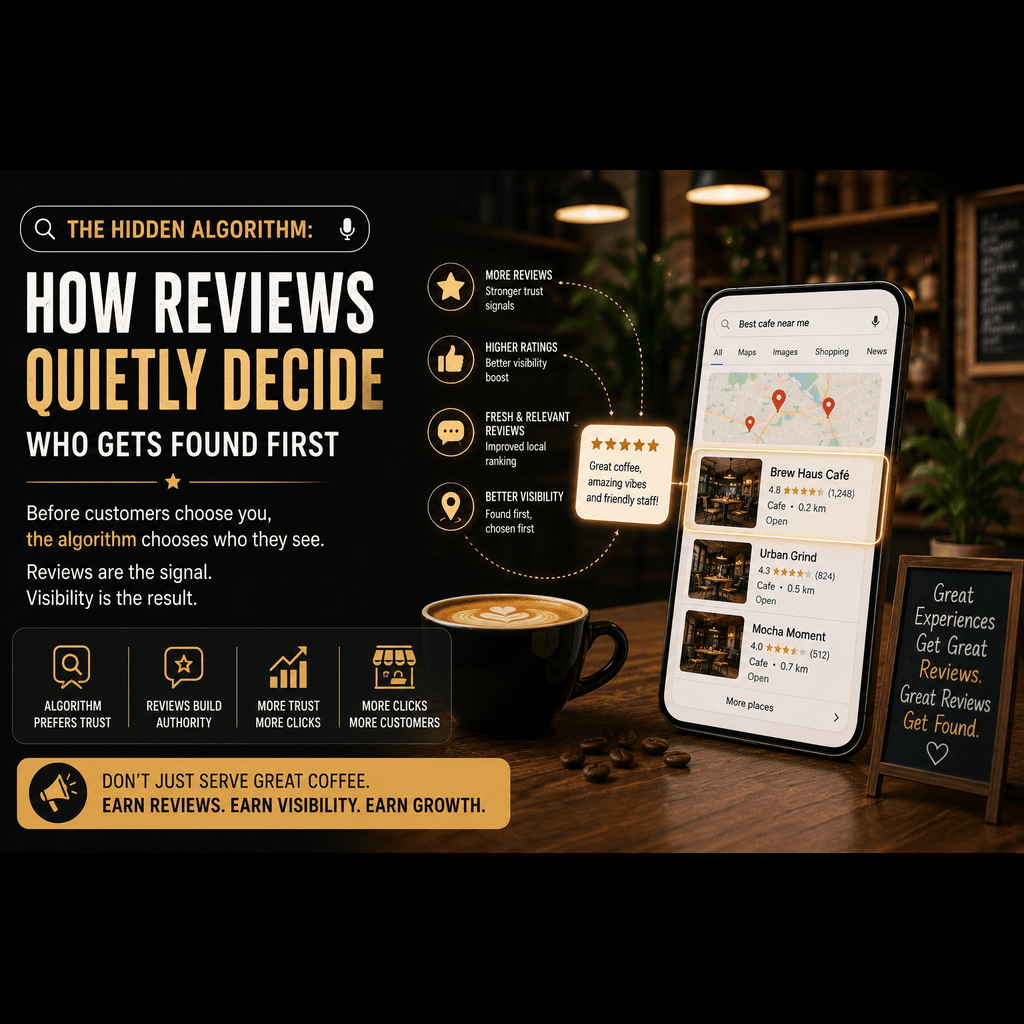
Trust is the real currency in dining decisions, and it’s built almost entirely online before a customer steps through the door. A restaurant with consistent, recent, well-managed reviews signals safety and quality. One with no reviews — or worse, unanswered complaints — signals risk.
Aim to respond to every review, good or bad, within 24-48 hours. A thoughtful response to a negative review often does more for trust than ten five-star ratings sitting unanswered.
This is one of the biggest blind spots in online restaurant marketing. Owners pour money into ads while their last twelve reviews sit unanswered, or while their photos are three years old and don’t match what’s actually being served. Customers notice. So does Google’s ranking algorithm, which increasingly favors businesses with active, recent engagement over static listings. A dedicated restaurant reputation management service handles exactly this — keeping reviews answered, current, and working in your favor instead of quietly piling up unattended.
The Third Difference: One Treats Marketing as a System, the Other Treats It as an Event
Here’s a pattern worth noticing: restaurants that stay fully booked rarely rely on a single big push. They don’t run one Diwali campaign and disappear for the rest of the year. They run a connected system — content, ads, reviews, and retention working together continuously.
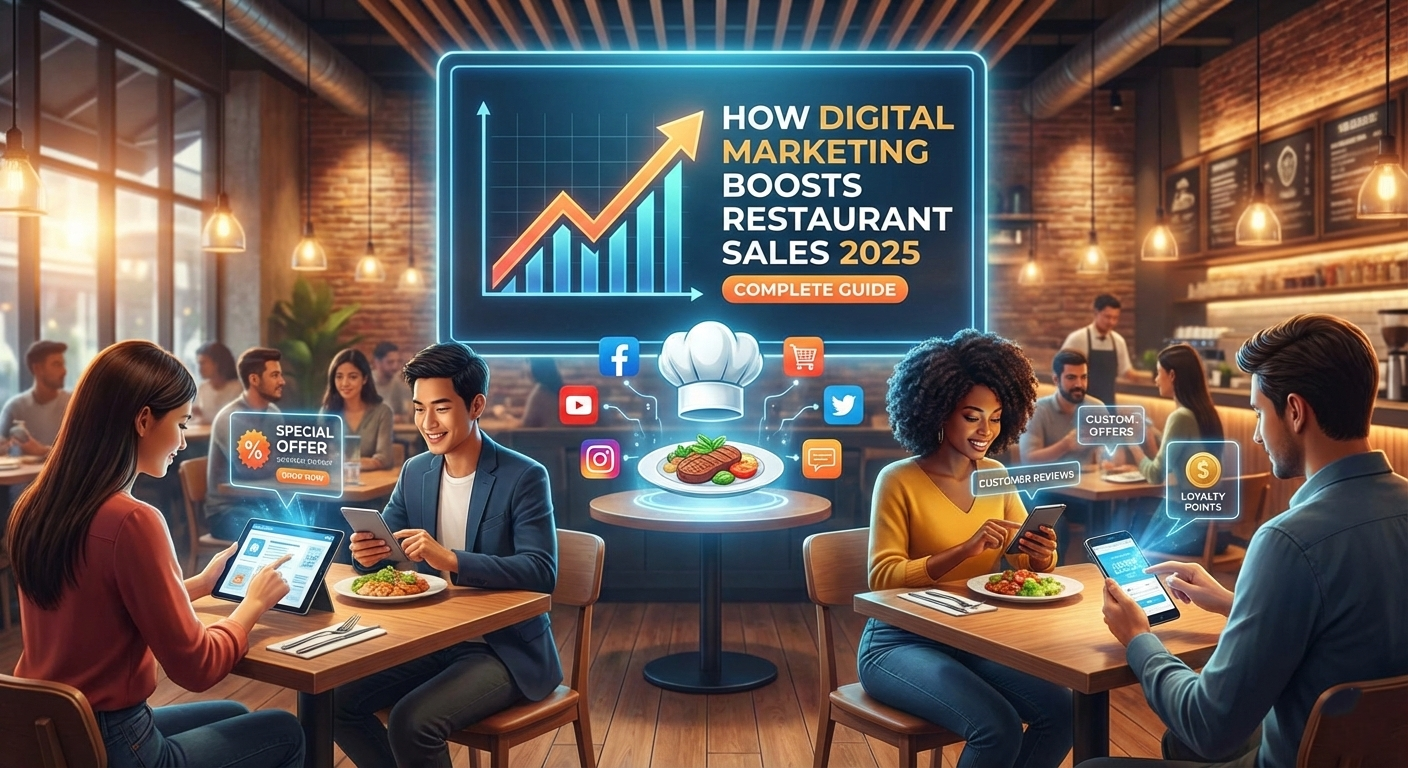
A genuine digital marketing agency restaurant owners can rely on typically builds this system around four moving parts:
- Visibility — SEO and local search so new customers can discover you organically
- Conversion — a website or ordering page that turns a search into a booking or order
- Retention — WhatsApp updates, email offers, or loyalty programs that bring customers back
- Reputation — consistent review generation and response that compounds trust over time
Most struggling restaurants are doing one or two of these, not all four. And the ones doing all four rarely look like they’re trying hard — that’s exactly the point. Good marketing should feel invisible to the customer while doing all the heavy lifting behind the scenes.
The Role Social Media Actually Plays (and Where Most Restaurants Get It Wrong)
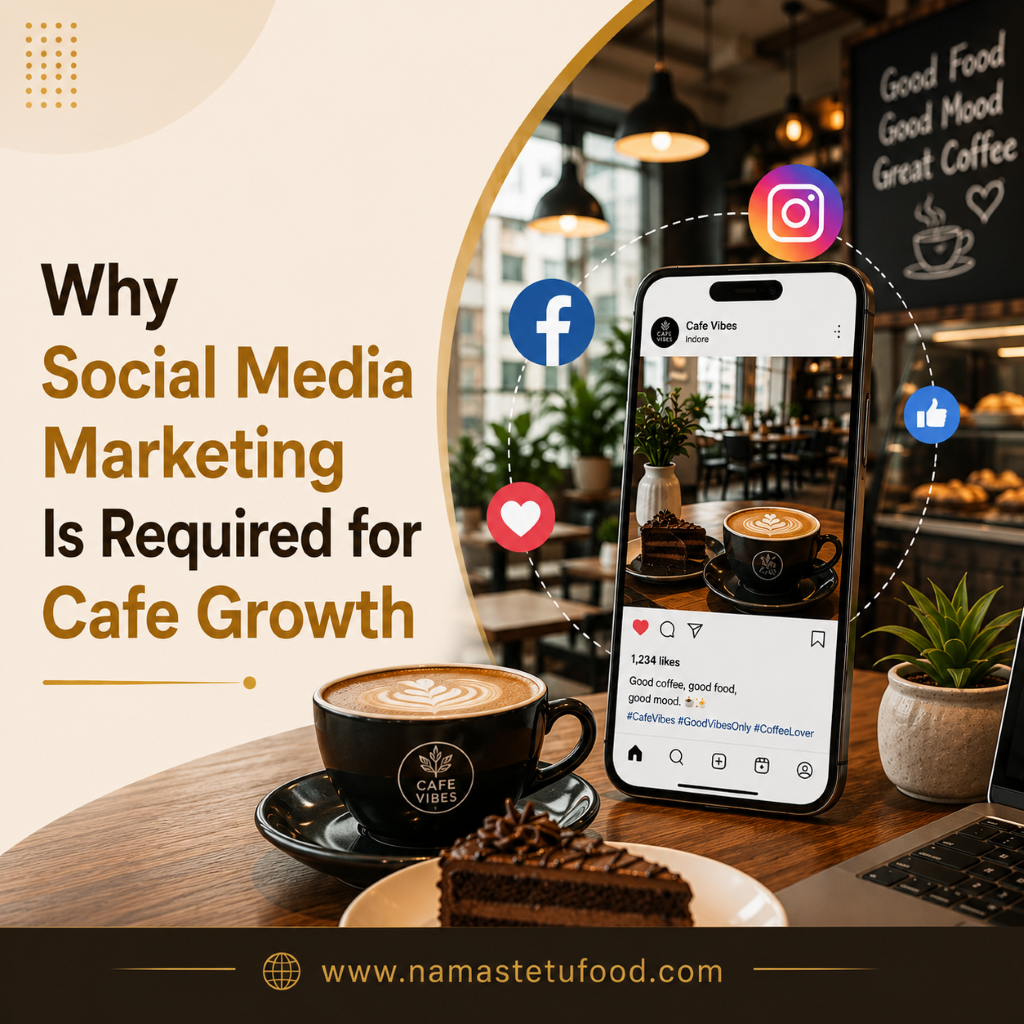
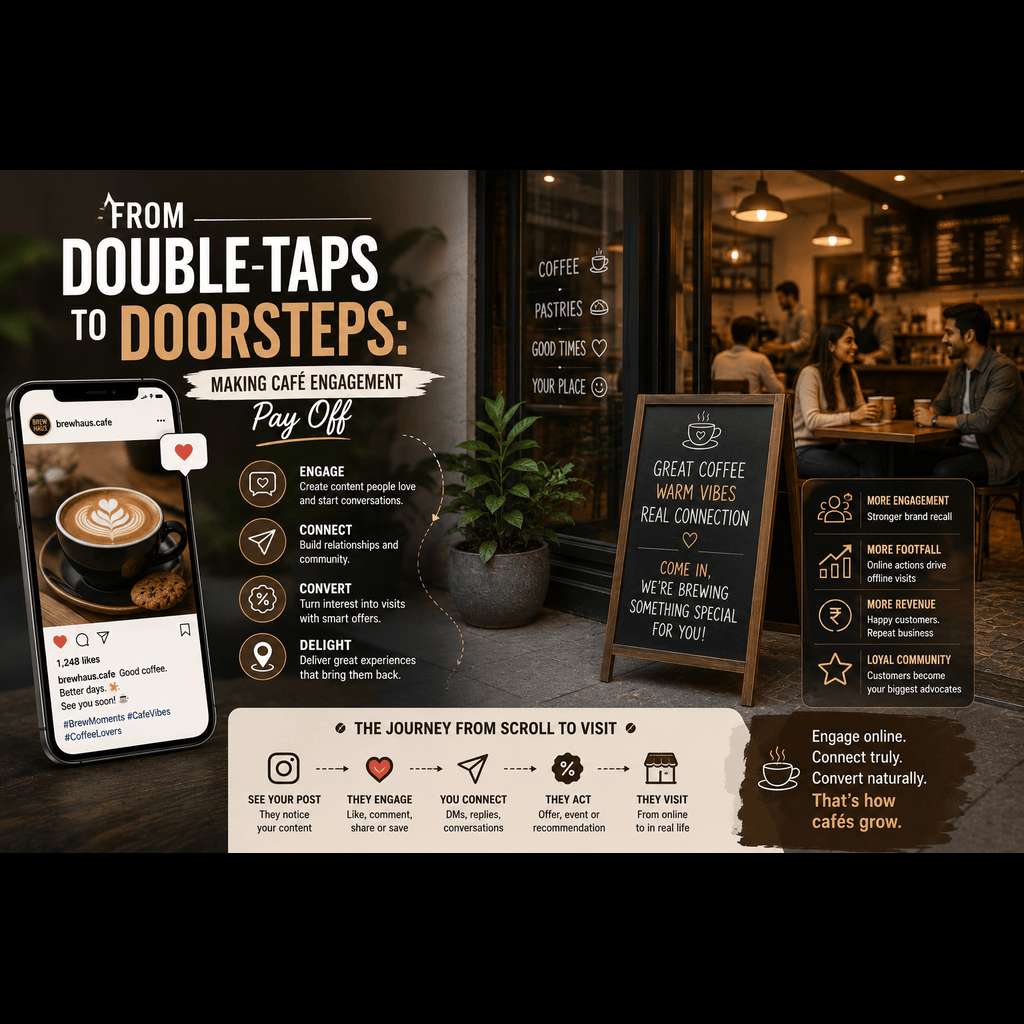
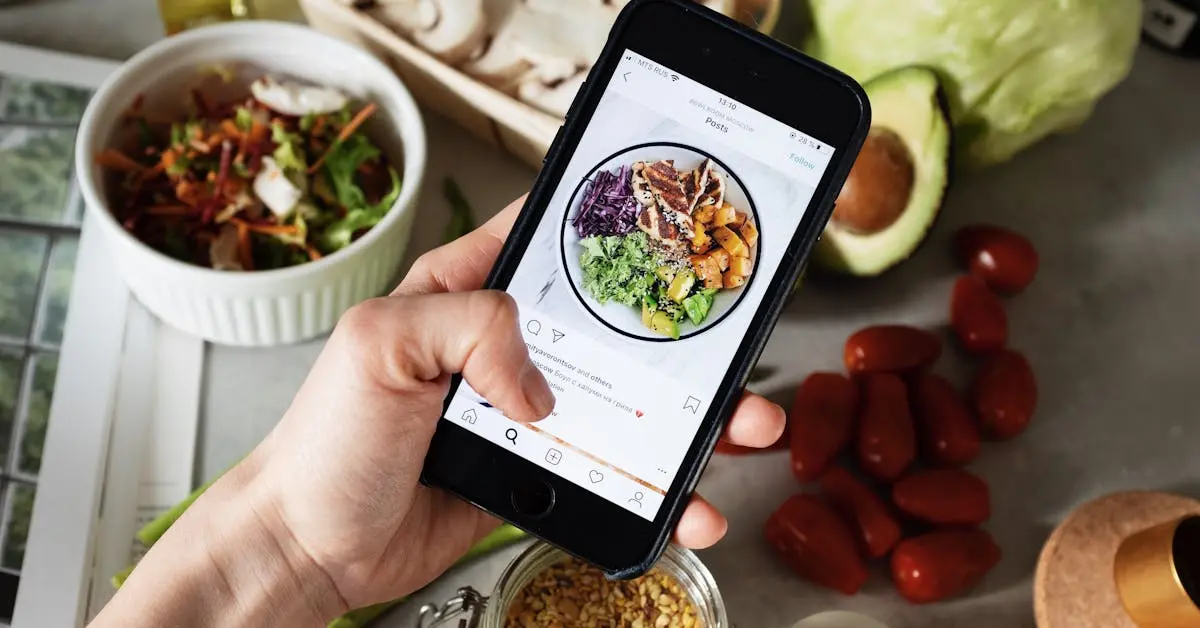
Posting a photo of a dish once a week isn’t a strategy — it’s a habit. The restaurants converting followers into footfall are doing something different: short-form video that shows the food being made or plated, behind-the-scenes glimpses of the kitchen, and real customer reactions instead of polished stock-style shots.
Pointer for smoother execution:
- Post at the times your audience is actually deciding where to eat — late morning for lunch decisions, late afternoon for dinner
- Use location tags and local hashtags consistently, not just on “special” posts
- Repost genuine customer content; it builds more trust than brand-created content ever will
This is where restaurant online marketing earns its name — it’s not about being loud online, it’s about being present at the exact moments customers are deciding. If keeping this consistent feels like more than your team can manage alongside running the restaurant, a restaurant social media marketing service can carry that load while keeping the voice and timing on point.
Why Festival Season and Weekends Separate the Winners Clearly
India’s dining calendar isn’t evenly spread. Festivals, long weekends, and wedding season concentrate enormous demand into short windows — and restaurants that plan campaigns in advance capture a disproportionate share of it. The ones that wait until the week of Diwali to post an offer are competing for attention an algorithm has already deprioritized, simply because they started late.
Planning content and promotions 3-4 weeks ahead of major dining occasions consistently outperforms last-minute pushes, because search interest and ad costs both spike closer to the date — early movers pay less and rank higher when it matters most. This is exactly where a coordinated, multi-channel approach pays off — we’ve broken down how that kind of Digital 360 marketing strategy works in more depth, and the same principle of aligning SEO, social, ads, and retention into one system applies just as directly to restaurants preparing for peak dining periods.
Where Most Restaurants Quietly Lose Customers Without Noticing
It’s worth being honest about the less glamorous failure points, because they’re often the easiest to fix:
- Missed calls during peak hours — a ringing phone nobody answers is a lost reservation or takeout order
- Outdated menus online — nothing erodes trust faster than ordering a dish that no longer exists
- Slow-loading websites — most mobile users abandon a page that takes more than a few seconds to load
- Inconsistent posting — disappearing from social media for weeks resets the algorithm’s trust in your account
None of these require a large budget to fix. They require consistency, and often, a second set of eyes that’s watching the business from the outside.
How This Comes Together in Practice
A restaurant doesn’t need to do everything at once to turn an empty dining room around. The businesses that recover fastest usually start with the highest-leverage fixes first: claiming and optimizing their Google listing, responding to every outstanding review, and getting their website mobile-ready. From there, they layer in consistent content and a basic retention channel like WhatsApp broadcasts.
This is precisely the kind of work a focused digital marketing strategy for restaurants should be built around — not flashy one-off campaigns, but a steady system that compounds visibility, trust, and repeat visits month over month. At Namastetu Food, this is the approach we take with every restaurant, café, and hospitality brand we work with: diagnose where the visibility or trust gap actually is, then build the specific mix of SEO, social, and reputation management that closes it — without wasting budget on tactics that don’t match how your customers actually search and decide.
Frequently Asked Questions
Why is my restaurant empty even though the food is good?
Good food alone doesn’t guarantee visibility. If your restaurant isn’t optimized for local search, lacks recent reviews, or has an outdated online presence, customers may never discover you in the first place — regardless of food quality.
How long does it take to see results from restaurant digital marketing?
Local SEO and Google Business Profile improvements often show early movement within 4-6 weeks, while deeper authority and ranking gains typically build over 3-6 months of consistent effort.
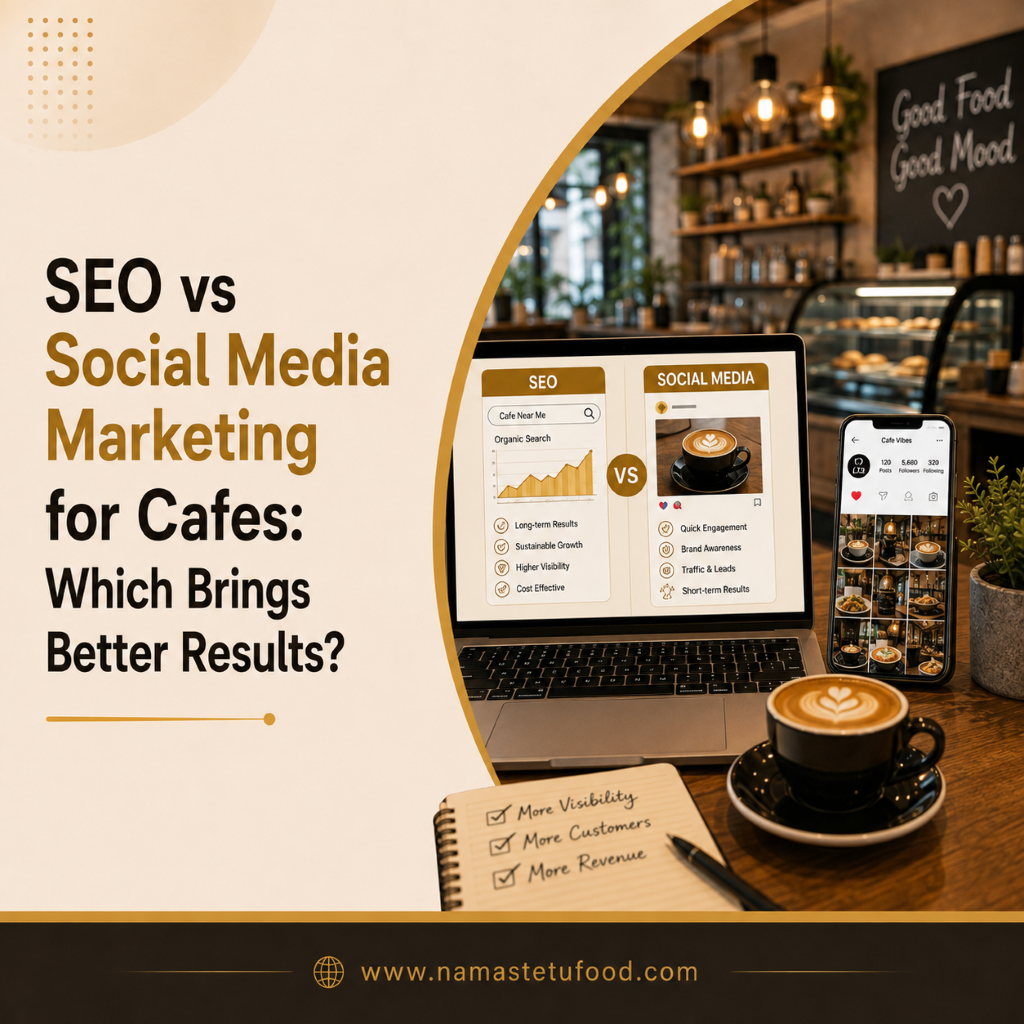
Is social media or Google search more important for restaurant marketing?
Both work together rather than competing. Google search captures customers actively looking to eat right now, while social media builds the awareness and trust that brings them back repeatedly.
Do I need a big budget to fill my restaurant consistently?
Not necessarily. Many of the highest-impact fixes — Google Business Profile optimization, review management, and consistent posting — cost time and attention more than money. Paid advertising helps accelerate results but isn’t the only lever.
What’s the single biggest mistake restaurants make in their online marketing?
Treating marketing as an occasional event rather than an ongoing system. Restaurants that post once during a festival and disappear for months consistently underperform those running smaller, consistent efforts year-round.
Conclusion
The gap between a fully booked restaurant and an empty one usually isn’t about who’s cooking better food — it’s about who’s easier to find, easier to trust, and harder to forget. The restaurants winning right now have simply turned visibility, reputation, and retention into a system instead of an afterthought. That shift is available to any restaurant willing to make it, and it’s exactly the kind of work that turns a quiet dining room into one that’s booked out, night after night.
Ready to turn your empty tables into a waitlist? Namastetu Food helps restaurants, cafés, and hospitality brands build exactly this kind of system — from local SEO and Google Business Profile optimization to social content and review management that actually brings customers back. Get in touch with our team for a free assessment of where your restaurant’s biggest visibility gaps are, and what it would take to close them.