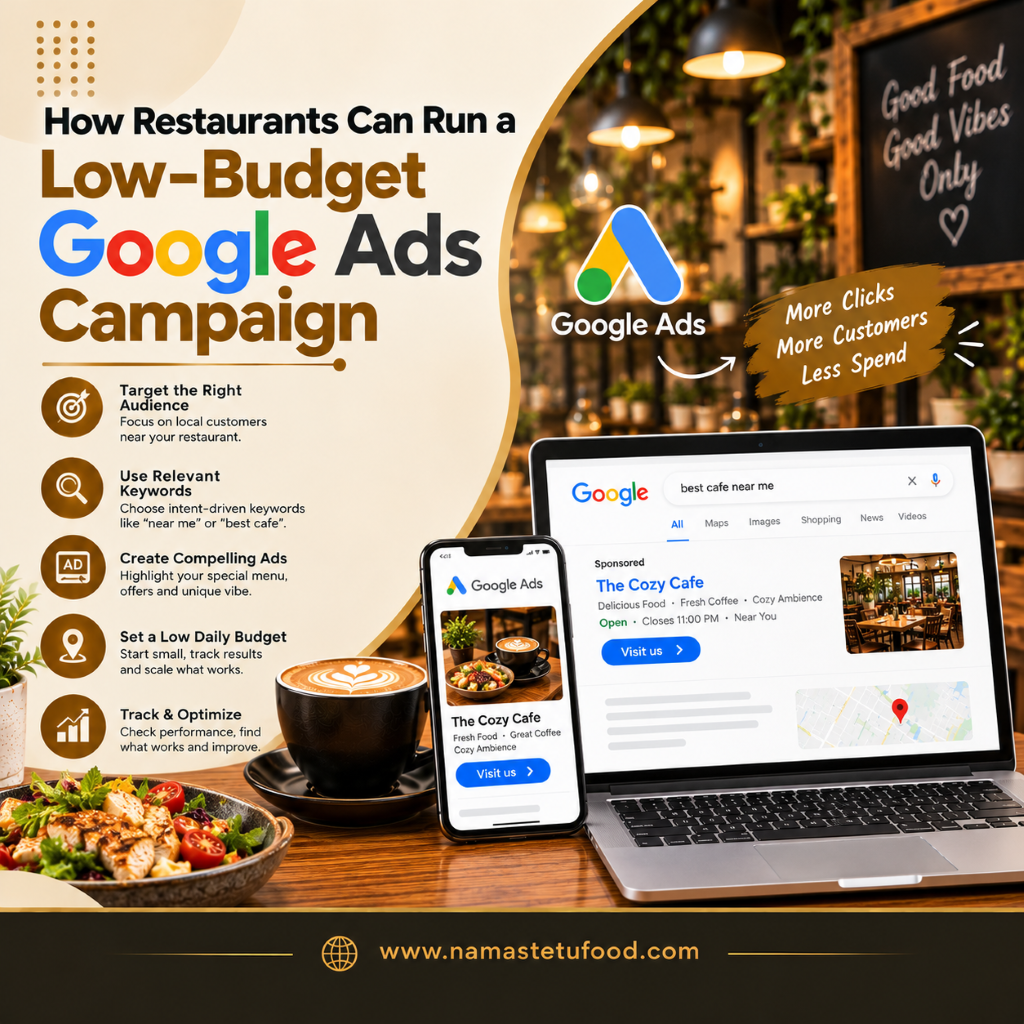
Restaurants can run a low-budget Google Ads campaign by targeting nearby diners, choosing high-intent search keywords, setting a daily spending limit and tracking calls, bookings and orders. Instead of paying for broad reach, you pay for clicks from people who are already searching for a place to eat, takeaway or delivery. With the right setup, Google Ads for restaurants can bring qualified customers while keeping costs under control.
At Namastetu Food, we help restaurants in Indore plan local ads that are judged by results. When every click needs a purpose, a focused campaign improves local visibility, booking enquiries and online orders without paying for irrelevant searches.
Why Restaurants Can Run a Low-Budget Google Ads Campaign Successfully
Google shows your ad when someone searches for a relevant dish, cuisine or service. A person searching for a family restaurant nearby is more likely to visit than someone casually browsing food content.
Three factors help a small budget work harder:
- Local targeting: reach people within a practical distance of the outlet
- Relevant keywords: target searches that show intent to visit, order or book
- Conversion tracking: measure calls, bookings and orders, not only clicks
This is what makes digital marketing for restaurants measurable. You can see which searches bring customers and change the campaign based on real results.
Set a Clear Goal Before Starting Google Ads for Restaurants
Decide what the campaign must achieve before you create an ad. A dine-in restaurant needs a different campaign from a cloud kitchen focused on delivery.
Common campaign goals include:
- More table bookings and enquiries
- More takeaway and delivery orders
- More guests during quiet business hours
- Promotion of a new menu, event or dining experience
- More calls, direction requests and nearby visits
Pick one main goal for each campaign. For example, a restaurant promoting weekday lunch can target lunch searches in its service area, while a booking-focused outlet can send visitors to a page with its menu, location and reservation options.
Choose High-Intent Keywords for a Small Restaurant Advertising Budget
Broad words such as “food” or “restaurant” attract many people who never plan to visit. Specific searches that match your cuisine and location usually give you more useful clicks for the same money.
Examples of high-intent keywords:
- “best family restaurant in Indore”
- “North Indian restaurant in Indore”
- “restaurant with outdoor seating in Indore”
- “vegetarian restaurant near me”
- “table booking in Indore”
Choose keywords that match your real cuisine, location and services. Never advertise for dishes or facilities you do not offer.
Use Negative Keywords to Stop Wasted Spending
Negative keywords stop your ad from showing for searches that are unlikely to bring customers. Depending on your business, these may include “restaurant jobs”, “chef vacancies”, “cooking classes” or “free recipes”.
Review the search terms report regularly to see which queries triggered your ads. Add irrelevant phrases as negatives, and check that you are not blocking searches that could bring guests.
Target Nearby Customers With Local Google Ads
Most restaurants draw guests from nearby neighbourhoods. Advertising across a whole city or state wastes money when your guests live or work close by. Set location targeting around your real service area, such as a few kilometres around the outlet or selected areas in Indore.
Follow these practices:
- Target areas that guests can realistically reach
- Check whether ads reach people in the area or people who only show interest in it
- Exclude areas outside your delivery or travel range
- Use area names in ads when they describe your business accurately
- Review results by location and refine over time
Local targeting makes restaurant lead generation ads more relevant, because the ad reaches people who are most likely to book or order.
Set a Realistic Daily Budget and Control Advertising Costs
A low-budget campaign needs a clear spending limit, focused targeting and regular reviews, not a large first investment. Start with an amount you can afford to test for a few weeks.
Set a daily budget in your Google Ads account and review the billing and budget settings before launch, because actual daily spending can vary from one day to another.
To manage spending well:
- Start with one focused campaign before launching several
- Prioritise your most profitable service or guest group
- Avoid frequent changes before enough data exists
- Check spend, search terms and conversions every week
- Raise the budget only when results justify it
The cheapest click is not always the best one. A campaign with fewer visitors but more bookings can deliver better business results, and this pay-for-results approach is the core of performance marketing for restaurants in Indore.
Write Google Ads That Encourage Customers to Take Action
Your ad should explain why a diner should choose your restaurant and what to do next. Useful points to highlight include:
- Your cuisine or dining experience
- A convenient location
- Genuine current offers
- Booking or ordering options
- Facilities such as outdoor seating or parking, when available
For example, a headline can read “Family Restaurant in Indore”, a second headline “View Our Menu and Book a Table”, and the description “Check our menu and location, then call or book online to plan your next meal.” Adapt this to your real offerings, and avoid misleading discounts or expired promotions.
Include one clear next step, such as view the menu, order, call or reserve. The page the ad opens should make that action easy to complete.
Improve Your Restaurant Website and Google Business Profile
The ad earns the click, but the landing page decides whether the visitor acts. Sending everyone to a generic home page adds friction. A strong landing page includes:
- Your restaurant name, address and contact details
- A readable, up-to-date menu
- Clear booking, ordering or enquiry options
- Opening hours and a map
- Good photos of your food and space
- A mobile-friendly layout that loads fast
Many local searches happen on mobile, so test the full journey on your phone. Keep your Google Business Profile consistent with your website, including hours, photos, contact details and menu. A complete profile does not promise lower ad costs, but it supports a trustworthy local presence.
Track Conversions Instead of Measuring Clicks Alone
Clicks show interest, not business. Set up tracking for completed orders, booking confirmations, enquiry forms and calls, and make sure call tracking is configured correctly.
Watch these metrics:
- Click-through rate (CTR): the share of impressions that become clicks
- Cost per click (CPC): the average price of each click
- Conversion rate: the share of visits that become a desired action
- Cost per conversion: the average cost of each tracked action
- Return on ad spend (ROAS): revenue from ads compared with ad cost, where revenue tracking is reliable
For example, a restaurant can divide its total ad spend by the number of qualified enquiries to find its cost per enquiry. This does not prove profit, because you must also count how many enquiries become paying guests and how much they spend.
Optimize Your Campaign Without Raising the Budget
Better results do not always need more money. Start by using the current budget more wisely with this routine:
- Search terms: add negative keywords for irrelevant searches
- Ads: compare messages and keep the ones that bring qualified visits
- Locations: reduce exposure in areas that bring poor traffic
- Landing pages: make the menu, phone number and booking buttons easier to find
- Bidding: choose a strategy that fits your goal and data, since automated bidding works best when tracking is reliable and enough data exists
Change one setting at a time, so you know which change improved or hurt results.
When Should Restaurants Hire a Restaurant Marketing Agency?
Google Ads needs keyword research, ad writing, tracking, landing page work and ongoing analysis. Owners often have little time for this next to daily operations. A restaurant marketing agency in indore can organise campaigns, find search opportunities and report performance.
When you compare marketing companies for restaurants, look for these points:
- Transparent reporting
- Clear campaign goals
- Experience with local businesses
- A clear split between ad spend and management fees
- No guarantee of a fixed number of customers or returns
A good partner explains its testing process, measures relevant outcomes and makes evidence-based recommendations.
AI Overview Summary: How Can Restaurants Advertise on Google With a Small Budget?
Restaurants can advertise on Google with a small budget by targeting nearby customers, choosing high-intent keywords, adding negative keywords and setting a manageable daily limit. They should send ads to mobile-friendly landing pages and track calls, bookings and orders.
The key steps are to define one goal, control location targeting, review search terms regularly and optimise for conversions instead of clicks. Increase spending only when campaign data supports it.
Frequently Asked Questions
How much should a restaurant spend on Google Ads?
It depends on your location, competition, goals and profit per order or booking. Begin with a manageable test budget, monitor results and increase spending only when the campaign brings valuable customers at an acceptable cost.
Are Google Ads effective for small restaurants?
Yes, they can help small restaurants reach people searching for dining options nearby. Results depend on keywords, local competition, ad quality, landing page experience and how well you turn enquiries into visits or orders.
Which keywords should restaurants use in Google Ads?
Choose relevant, high-intent searches linked to your cuisine, location and services. Examples include “family restaurant in Indore”, “vegetarian restaurant near me” and “table booking in Indore”, as long as they match your business.
How can restaurants reduce Google Ads costs?
Narrow location targeting, add negative keywords, refine ads, improve landing pages and review conversion data. Avoid paying for irrelevant searches and focus on actions that lead to revenue.
Should a restaurant hire a Google Ads agency?
It can help when you lack the time or skills to manage campaigns, tracking and optimisation. Compare marketing companies for restaurants by their reporting, local market knowledge and ability to measure real business results.
Conclusion
A successful low-budget campaign starts with a clear goal, relevant keywords, local targeting and accurate conversion tracking. That is how restaurants can run a low-budget Google Ads campaign without competing on who spends the most. You only need to reach the right guests and make it easy for them to act.
Want help setting up your campaign? Contact Namastetu Food and book your free Google Ads consultation today to get a clear, measurable plan for more calls, bookings and orders.